2026 How to Choose the Right Tire Shredder for Your Needs?
When it comes to selecting a tire shredder, understanding your specific needs is crucial. John Smith, a renowned expert in the recycling industry, emphasizes, “Choosing the right tire shredder can make or break your operation.” This statement reflects the importance of making an informed decision.
Tire shredders vary in size, power, and functionality. Each model serves different purposes, from small-scale operations to large industrial applications. It’s essential to consider the volume of tires you plan to process and the desired output size. Many users overlook their production requirements, which can lead to inefficiency.
Furthermore, the durability and maintenance of a tire shredder play a significant role in its long-term reliability. Regular upkeep can prevent unexpected downtime and costly repairs. Selecting a model that fits your budget, while also meeting your operational needs, is a delicate balance. Reflecting on these factors can lead to a more effective investment in the right tire shredder for your business.
Understanding Different Types of Tire Shredders: Pros and Cons
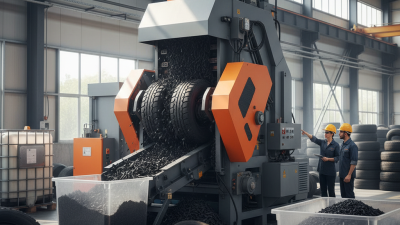
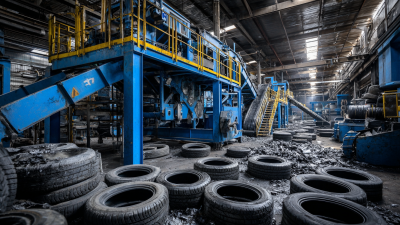
When selecting a tire shredder, understanding the different types available is essential. There are two main categories: industrial and mobile shredders. Industrial tire shredders are typically larger and designed for high-volume operations. They offer efficient processing and can handle various tire sizes. However, their upfront cost can be significant. Maintenance may also be more complex, which can affect long-term usability.
On the other hand, mobile tire shredders provide flexibility. They're easier to transport and suitable for smaller operations. This type is ideal for businesses that need to operate at different sites. However, mobile shredders may not handle large quantities as efficiently as industrial units. Their smaller design may limit processing capacity. Weighing out these factors is crucial for making an informed choice.
Both types have unique advantages. Industrial shredders deliver higher throughput, while mobile shredders offer convenience. Cost and operational needs play a big role in the decision. It is vital to consider your specific requirements. Evaluating the pros and cons of each can seem overwhelming. Reflecting on your operational goals will help clarify your choice.
2026 How to Choose the Right Tire Shredder for Your Needs?
This chart illustrates the pros and cons of different types of tire shredders, helping you understand their various features and efficiencies.
Key Specifications to Consider When Selecting a Tire Shredder
Choosing the right tire shredder is crucial for efficient operations. Key specifications can greatly influence performance. A report from the Waste Management Association indicates that a shredder's capacity affects output significantly. For instance, machines with a capacity of 1.5 tons per hour can handle medium-sized operations effectively. Understanding the required throughput is essential for meeting daily demands.
Another important factor is the particle size output. Many operations need specific sizes of rubber chips or granules. Research shows that a 10 mm output is ideal for recycling processes. Operators must communicate their desired end product to ensure the right machine is selected. Additionally, the drive power of the shredder plays a role in its effectiveness. A robust motor can increase efficiency but may raise operating costs.
Maintenance is often overlooked but critical for tire shredders. Regular checks on blades and motor performance prolong the machine's life. A flawed maintenance strategy can lead to unexpected downtimes. Operators should keep maintenance logs to track machine health. Often, companies underestimate the importance of operator training as well. Proper training can lead to safer and more effective operation. These aspects are vital to consider beyond the specification sheets.
Evaluating Tire Shredder Capacity: How Much Output Do You Need?
When choosing a tire shredder, understanding your output needs is crucial. Tire shredders come in various capacities, which significantly affects operational efficiency. Industry reports indicate that small-scale operations may need machines with a capacity of 1 ton per hour, while larger plants might require 10 tons or more. It's essential to evaluate how much material you plan to process daily.
Consider, for example, a facility that handles 50 tons of tires each day. This facility needs a shredder capable of processing a minimum of 2 tons per hour. Many shredders can handle a variety of tire sizes, but choosing the right capacity can prevent unnecessary downtime and excess wear on machinery. Data shows that equipment running below optimal capacity can lead to increased operational costs and poorer performance.
Exploring your storage space and processing goals adds another layer to this evaluation. If space is limited, you may opt for a multi-functional shredder that combines processing capabilities. However, this might sacrifice maximum output. Balancing space constraints with the need for efficiency invites reflection. Identifying your specific needs now can save you from costly miscalculations later.
2026 How to Choose the Right Tire Shredder for Your Needs? - Evaluating Tire Shredder Capacity: How Much Output Do You Need?
| Tire Shredder Model |
Shredding Capacity (tons/hour) |
Motor Power (kW) |
Output Size (mm) |
Weight (kg) |
| Model A |
5 |
30 |
50 |
2500 |
| Model B |
10 |
45 |
40 |
3000 |
| Model C |
15 |
55 |
30 |
3500 |
| Model D |
20 |
75 |
25 |
4000 |
Assessing Efficiency and Energy Consumption of Tire Shredders
When selecting a tire shredder, efficiency plays a crucial role.
An efficient machine reduces processing time. This means you can handle more tires in less time.
Energy consumption is another vital aspect. High energy usage can lead to increased operational costs.
These factors directly affect profitability.
Consider the power consumption ratings of various models. A machine with lower energy needs might save money over time. However, efficiency isn't just about output rates. It also involves maintenance requirements and operational ease. A shredder that requires frequent repairs can impact performance.
Analyzing efficiency involves observing various metrics. Look at shredding capacity, cycle times, and power input. Each metric tells a different part of the story.
Don't overlook material throughput. Sometimes a machine's specs look good on paper, but real-world performance may differ. Testing different machines in real conditions helps to identify true efficiency.
Comparing Cost-Effectiveness: New vs. Used Tire Shredders
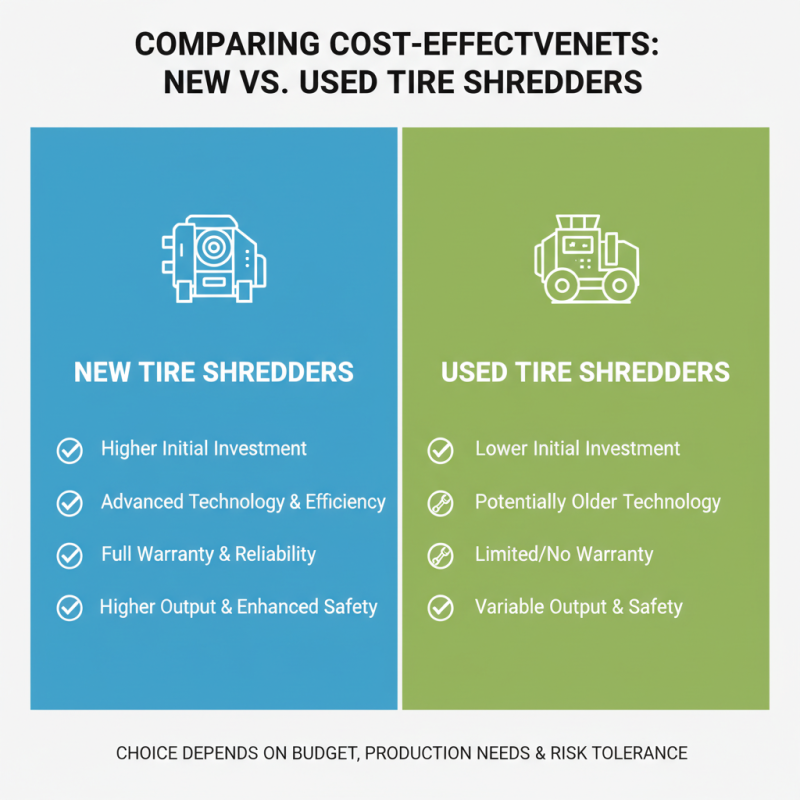
When choosing a tire shredder, the cost-effectiveness of new versus used models is crucial. New tire shredders often come with advanced technology and warranties, ensuring efficiency and reliability. However, the initial investment is significant. A new shredder may provide higher output and better safety features.
In contrast, used tire shredders may be more affordable, but they come with risks. Wear and tear can lead to unanticipated repairs, affecting your budget. Additionally, older models might lack the efficiency of newer counterparts, consuming more energy.
**Tips:** Always inspect used equipment carefully. Look for signs of extensive wear or damage. Research the seller’s reputation and service history. Compare the long-term cost of ownership between the two options. In some cases, spending more on a new model could pay off in lower operating costs.